
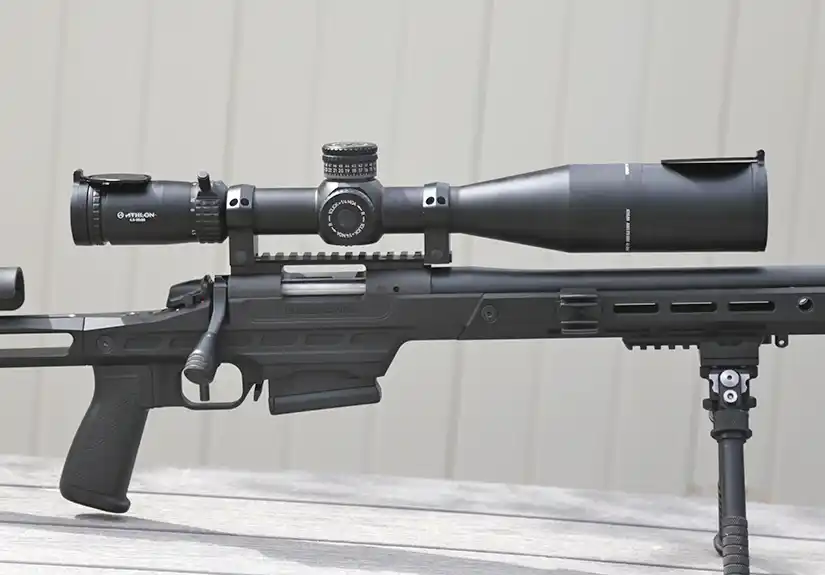
If you’re looking at the Athlon Ares ETR Gen2 UHD 4.5-30×56, you’re probably trying to decide whether the step up in price translates into better performance at distance. In this case, that usually comes down to two things: more magnification and whether the glass can support it.
This Athlon Ares ETR Gen2 UHD 4.5-30×56 review is based on real range use, focusing on how well it holds together as you push magnification and stretch distance, rather than just listing specs.
I picked this scope up for a 6.5 Creedmoor build to reach out farther than I typically do with rimfire. While most of my shooting is inside 200 yards, I do have access to 600, so I wanted something that would hold up at higher magnification and allow for more deliberate shooting.
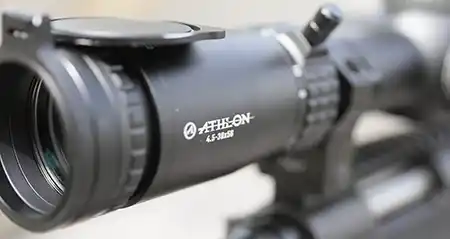
Specs & Features
- Magnification: 4.5–30x
- Objective Lens: 56mm
- Tube Diameter: 34mm
- Reticle: APLR12 FFP IR (MOA)
- Click Value: 0.25 MOA
- Eye Relief: 3.9″
- Field of View: 24.5 – 3.75 ft @ 100 yds
- Parallax: 25 yards to infinity
- Length: 15.3″
- Weight: 36.8 oz
- Zero Stop: Yes
- Locking Turrets: Yes
- Assembly: Assembled in Japan
Both the box and the scope itself specify Assembled in Japan, which lines up with the overall optical performance and fit and finish.
MSRP and Real-World Pricing of the Athlon Ares ETR Gen2 UHD 4.5-30×56
Athlon currently lists the Ares ETR Gen2 UHD 4.5-30×56 at an MSRP of $1,624.49. Actual retail pricing is often lower, and the difference between retailers can be significant.
That puts it in a spot where it needs to justify the price jump over more affordable options. Before buying, compare current pricing and inventory:
Comparison to Lower-Priced Scopes
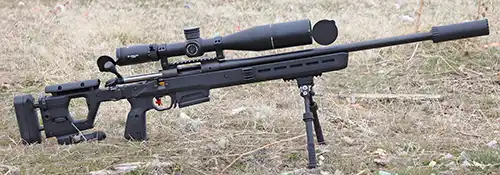
I have spent time behind the Vortex Venom 5-25×56 and the Arken EP5, both of which sit at a lower price point and offer less magnification range. They are solid options for the money, but they also show their limitations as you start pushing distance and magnification.
The biggest difference with the Ares ETR Gen2 is how well it holds together as you move up the magnification range. Where lower-priced scopes can start to lose clarity and become less forgiving, the Athlon remains usable and consistent. That makes it easier to stay on target and make deliberate adjustments, especially when shooting farther out.
That does not mean the cheaper scopes are bad. It just highlights what you get when you move up in price. In this case, the improvement is noticeable enough that it feels justified.
Glass Quality at High Magnification
The glass quality is one of the strongest selling points of this scope. At lower magnification, it’s sharp from edge to edge. But the point of this scope was to gain some extra magnification. As already mentioned, it maintains clarity well past the point where lesser optics tend to fall apart, which makes the upper magnification range far more usable than expected.
The eyebox does get a little less forgiving as you push toward the top end, but it never becomes frustrating. I also could not reproduce the minor chromatic aberration some users have reported, although my shooting was limited to early mornings and late afternoons, so lighting conditions were not especially harsh. In brighter midday light or against high-contrast targets, it may be more noticeable, but under my shooting conditions, it did not stand out or affect usability.
Mirage became a bigger factor once temperatures climbed, especially at higher magnification. That is not a limitation of the scope as much as a reality of shooting at distance. Dropping magnification helped, and the Ares ETR Gen2 still maintained enough clarity to stay usable even when conditions were less than ideal.
Tracking and Dialing Performance
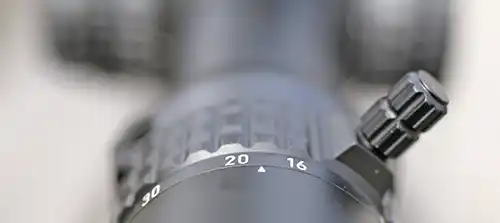
I have yet to use a modern scope that did not track reasonably well, and the Ares ETR Gen2 is no exception. Dialing for longer shots and returning to zero was spot on, and a standard box test confirmed that.
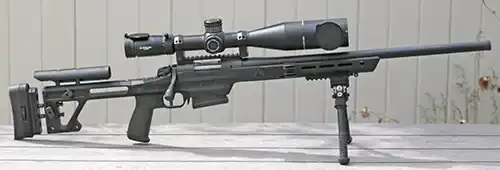
Mounted on my Bergara 6.5 Creedmoor, the scope felt like a natural match. Nothing about the optic held the rifle back, which is exactly what you want in this category.
Hands-On Range Use With the Athlon Ares ETR Gen2 UHD 4.5-30×56
Zeroing the Ares ETR Gen2 was simple. After mounting the scope using some Warne rings, I did a quick and rough laser zero at home. I then dialed it in at 100 yards once I got to the range. From there, it was just a matter of making small adjustments as needed.
I bought six different boxes of factory ammo to try with this rifle, and as expected, I did have to make some minor changes after switching brands. The rifle is accurate, but the point of impact changed a bit depending on the brand and bullet weight. That is not unusual, but it was a reminder that even a good rifle and scope combination still depends on consistent ammo. A few clicks got me back on track quickly and accurately.
Most of my shooting was done on public land, where access is first-come, first-served. We have flat ground with a little over 200 yards available, along with a single spot where we can shoot to a bit over 600 yards. Due to weather, timing, and access, I never had the opportunity to shoot past 300 yards during this review. That was fine for where I am with this rifle. I still need to work on my own skills and load development before stretching it out further. Based on my time behind it, though, the scope seems like a more than capable partner for that.
Turret Feel and Usability
The turrets are genuinely good, not just “good for the price.” For me, turrets that do not have a solid click you can feel and hear would be a dealbreaker, and that is not an issue here.

The clicks are crisp and positive, requiring deliberate force without feeling overly stiff. I never felt like I was going to over-dial by accident, but they also never required more effort than necessary. “Just right” is probably the best way to describe them.
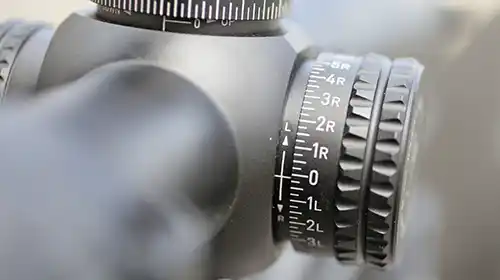
I have been spoiled by another brand’s larger, easier-to-read engravings, but I had no trouble using these. The locking windage turret is also a nice touch, especially if you have ever bumped one unintentionally. No one likes that kind of surprise.
Small Details That Feel Premium
The included scope caps were noteworthy. They are aluminum, thread on securely, and the hinge design allows them to open fully until they fold flat against the scope. That may sound like a small thing, but it is exactly the kind of detail I am not used to seeing on less expensive optics.
Reticle Use in Real Shooting
The APLR12 reticle is designed for precision work, and that shows. In my case, I tend to shoot at higher magnification when stretching distance, so the reticle works well in that context.
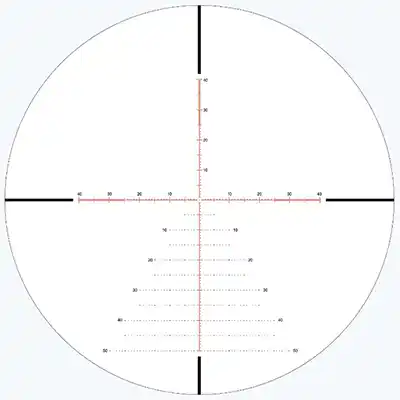
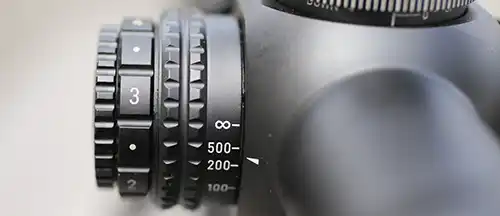
One detail I really liked was the center dot in the reticle. It provides a precise aiming point without making the center feel cluttered. I also found the illumination useful under some lighting conditions, even though I rarely use an illuminated reticle. The illumination dial was much harder to turn than I expected, but I did appreciate the off positions between each brightness setting. The smoothness of the eyepiece more than made up for that.
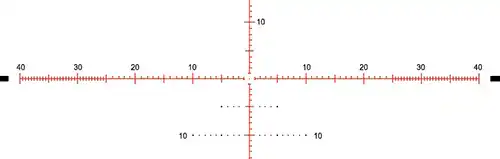
With rimfire, I am more likely to use the reticle for windage and elevation holds. With this 6.5 Creedmoor setup, I found myself being more deliberate and dialing adjustments instead. That meant I did not fully lean on everything the reticle offers, but I still appreciate having those options available.
Weight and Practical Use
My rifle has a 22-inch barrel and sits in Bergara’s own BMP chassis, or a Magpul Pro 700 folding chassis with an Atlas bipod and monopod. I’m still trying to decide which I prefer. Total weight with the scope is in the 14 to 15 pound range.
In that setup, the scope’s 36.8-ounce weight is not an issue at all, since I am typically shooting from a portable table or prone. If you plan to shoot offhand often, though, that weight will be noticeable. On a rifle like mine, it feels appropriate. On a lighter rifle, it would stand out much more.
Gen 2 vs Gen 1
I have not used the Gen 1 version, so I cannot make a direct comparison. That said, the move to Japanese assembly, at least for my sample, suggests that improving overall quality may have been part of the goal. More importantly, nothing about the Gen 2 feels like a compromise. It performs the way you expect it to, without any obvious shortcomings that leave you wishing for something better.
Who This Scope Is For
I am not hunting or competing right now. I bought this rifle for longer-range shooting and to learn more about load development, and for that role, this scope makes a lot of sense. It offers a usable magnification range and comes in at a price point that feels reasonable for what you get. The weight may be a dealbreaker for hunters, and the price may turn off more casual shooters, but it fits well for someone focused on deliberate shooting and improving at distance.
Based on my experience, I would have no hesitation using it in a match. It may not be the optic someone chooses when chasing every possible advantage at the highest levels, but it feels more than capable for serious long-range work.
Is the Athlon Ares ETR Gen2 UHD 4.5-30×56 Worth It?
Yes. At current retail pricing, the Athlon Ares ETR Gen2 UHD 4.5-30×56 is easy to justify. You are getting clear, usable glass across the magnification range and turrets that make adjustments quick and predictable.
It does not try to be something it is not. Instead, it delivers solid performance where it matters, which makes it a strong option for anyone building out a capable long-range rifle without overspending.
Prices on this scope can vary considerably, so check more than one retailer before buying.
- Check the current Athlon Ares ETR Gen2 price at MidwayUSA
- Check current Athlon scope pricing at Brownells
- View the official Athlon Ares ETR Gen2 specifications
As always, I’d like to thank Athlon for providing this scope for my testing and evaluation.