
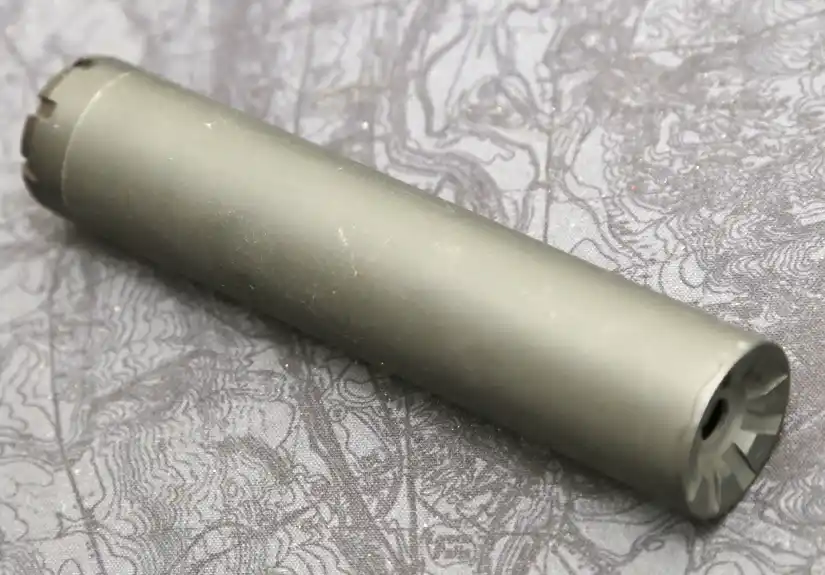
The SilencerCo Sparrow 22 is an old suppressor by current standards. SilencerCo introduced the Sparrow when the company got started in 2008, and rimfire suppressor design has moved on considerably since then. Newer designs can be lighter, reduce first-round pop, and offer features such as modularity. Yet SilencerCo still sells the Sparrow, and shooters are still buying it.
I am one of them. I bought mine recently for $285 before tax. With Utah sales tax, the price came to $306.23, and I paid another $15 for the transfer. I did not buy it because I needed to replace an older suppressor. I already own a Tactical Solutions Axiom that has served me well. I wanted another rimfire suppressor so friends could shoot suppressed when we go out together.
That makes the question behind this review pretty simple. Nearly two decades after the Sparrow appeared, does it still make sense to save some money on this older design, or should buyers spend more for something newer?
A Brief History of the SilencerCo Sparrow 22
The Sparrow has more history behind it than most rimfire suppressors still on the market. It was the first suppressor SilencerCo created. Company co-founder Jonathon Shults has described the original goal as making a simple and inexpensive .22 suppressor that would let the young company get some manufacturing experience.
One of the ideas that made the Sparrow different was its two-piece clamshell around the monocore. Rimfire ammunition is notoriously dirty, and lead and carbon buildup can make a suppressor difficult to take apart. The clamshell design helps keep that fouling from locking the serialized outer tube to the core. User serviceability was a much bigger part of the Sparrow story than chasing a single impressive sound number.
That basic idea has survived while the rest of the rimfire suppressor market has evolved around it. The Sparrow is no longer cutting-edge technology, but it has also had nearly two decades to prove itself.
Buying a Suppressor Is Easier Now
The Sparrow is an old design, but the buying environment around it has changed dramatically. When I bought my first suppressor, the Axiom, the process took 220 days and included a $200 federal transfer tax. That kind of time and money commitment made the choice feel much more permanent.
That is not the suppressor market in 2026. The federal transfer tax on silencers is now $0, and electronic Form 4 approvals can move much faster than they once did. ATF reported a median processing time of eight days for individual eForm 4 applications finalized in July 2026. My most recent e-file approval took four days.
That matters when considering the Sparrow as a first suppressor. A roughly $300 rimfire suppressor no longer automatically becomes a roughly $500 purchase before transfer fees, and the wait may be measured in days rather than months. The lower cost and shorter process make it easier to start with a proven value like the Sparrow now and decide later whether the features of a more expensive design are worth adding.
SilencerCo Sparrow 22 Specs
The current Sparrow 22 is made entirely from 17-4 stainless steel. SilencerCo lists it at 5.08 inches long, 1.07 inches in diameter, and 6.5 ounces. MSRP is $349, although street prices can be considerably lower. Mine was $285 before tax.
- Length: 5.08 inches
- Diameter: 1.07 inches
- Weight: 6.5 ounces
- Material: 17-4 stainless steel
- Rated calibers: .22 LR, .22 WMR, .17 HMR, .17 WSM, .22 Hornet, and 5.7x28mm
- .22 LR rating: Full-auto rated
- MSRP: $349
Those numbers do show the Sparrow’s age in one respect. There are modern titanium rimfire suppressors that weigh less. But specs do not always tell you what you will actually notice when the suppressor is on a firearm.
Smaller Matters More Than Lighter
My Axiom is a little lighter than the Sparrow, but the Sparrow is also smaller. In actual use, I notice the shorter size. I do not notice the slight increase in weight.
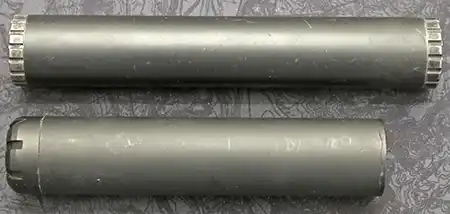
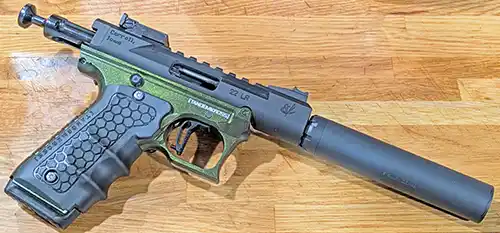
That is especially relevant because my primary Sparrow host is a Ruger Mark IV with a 3-inch Volquartsen Mini Mamba LLV upper, a pistol I call Ca$h Money. I am also accustomed to shooting suppressed pistols and heavier 9mm suppressors, so 6.5 ounces hanging off the muzzle of a rimfire pistol simply does not strike me as heavy.
If shaving every possible ounce from a pistol is your priority, there are newer options that do it better. For the way I use the Sparrow, its compact size has been more noticeable than its weight.
First-Round Pop: Real, But Does It Matter?
First-round pop is probably the criticism most closely associated with the SilencerCo Sparrow 22. It is real. My Axiom has essentially no first-round pop, so I already knew what a rimfire suppressor without that characteristic sounded like before I bought the Sparrow.
I bought the Sparrow anyway.
Most of our shooting is outdoors, and we use a lot of CCI Standard Velocity. On a pistol, I have to listen for the Sparrow’s first-round pop to really notice it. On a rifle, I do not recall noticing it at all. Once a semiautomatic is running, I hear the action cycling and then the bullet striking steel. Whatever difference exists between the Sparrow and Axiom after that is not something I find worth obsessing over.
There is another useful perspective here. The Sparrow often goes on a friend’s pistol or rifle while I shoot the Axiom right next to them. If the Sparrow’s first-round pop were particularly unpleasant to someone standing beside it, I would be in a good position to notice. It has not bothered my ear as the shooter or as the person next to it.
Hunting could change that calculation. When the first shot may be the only shot that matters, reducing first-round pop has more value. For target shooting and recreational plinking, I consider it much less important.
What About Suppressor Tone?
The Sparrow and Axiom do not sound exactly the same, and I would not expect them to. The Sparrow uses a monocore in a smaller package, while the Axiom uses a stack of individual baffles. Different internal designs and volumes are going to produce different tones.
I deliberately listened for the difference, and that exercise made me realize that comparing the two suppressors directly is less useful than comparing either one with an unsuppressed shot. Both are quiet. The Sparrow has a slightly different tone. It is not objectionable in any way.
Do I prefer the tone of my Axiom? Probably. I have owned it for years, it was my first suppressor, and that sound is familiar to me. Familiarity is not the same thing as objectively better performance.
If suppressor tone is a major factor in your buying decision, specifications and reviews can only take you so far. You will probably want to find a way to hear several suppressors yourself. And if you are shopping that carefully for a particular sound signature, there is a good chance you are already looking beyond the roughly $300 price range of the Sparrow.
Firearms and Ammunition Used With the Sparrow 22
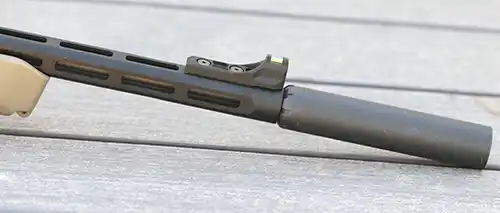
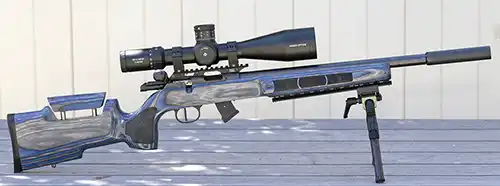
The Sparrow spends most of its time on my Ruger Mark IV Ca$h Money setup with the 3-inch Mini Mamba LLV. When friends join me, it also gets moved among a Taurus TX22, various Ruger 10/22 and 22 Charger configurations, the TANDEMKROSS TKX22 Light Rifle, my CZ 457, and a Ruger American Rimfire. That mix gives me semiautomatic pistols, semiautomatic rifles, and bolt-action rifles rather than one idealized test host.
Most of the ammunition has been CCI Standard Velocity. I have also used Federal and Winchester bulk ammunition. Those are not subsonic loads, so their sound signature depends more on the host and barrel length. Out of the 3-inch Mini Mamba LLV, the short barrel keeps bulk ammunition from producing the same supersonic crack you may hear from a rifle.
Reliability and Point of Impact
All direct-thread suppressors should be checked periodically while shooting, and I check mine. I do not recall finding the Sparrow noticeably loose during a range session.
I have not noticed a meaningful point-of-impact change on pistols, although I am not using those pistols to shoot tiny groups. More importantly, I have not noticed a POI shift on my CZ 457 Pro Varmint. That rifle has a heavy 16-inch barrel and is exceptionally accurate, so a meaningful shift is more likely to stand out there than it is during casual pistol shooting. I have not done a formal suppressed-versus-unsuppressed bench test, but in normal use the Sparrow has not changed the rifle’s point of impact enough for me to notice.
Cleaning the SilencerCo Sparrow 22
After hundreds and hundreds of rounds, I finally took the Sparrow apart for cleaning. This is where the design’s age and its reputation for serviceability both deserve a little context. Mine did not simply unscrew and slide apart by hand.
I wrapped the body in a strip of leather so I could hold it in a vise without damaging the finish, then used another strip of leather over the rear cap to break it loose. Once the cap was off, I used a wooden dowel to push the clamshell and monocore assembly out of the tube.
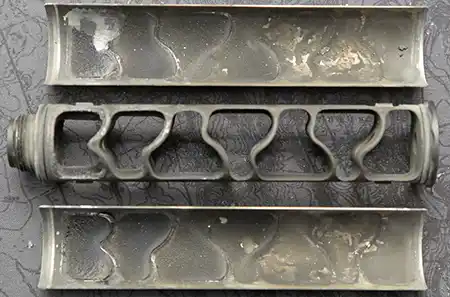
From there, cleaning is pretty standard rimfire suppressor maintenance. My preferred approach is an overnight soak in Breakthrough Clean Suppressor Cleaner, which I have reviewed separately, followed by the usual cleanup of the fouling.
Before reassembly, I polished the outside surfaces of the clamshell pieces and the inside of the suppressor body, then gave both a light coat of oil. In hindsight, I would probably do that polishing and light oiling when the suppressor is new. It may make the first heavily fouled teardown easier later.
The Sparrow is not as easy to take apart as my Axiom, but it was not terrible either. The clamshell system still keeps the fouling where you can get to it once the assembly is out of the tube. I would describe the design as serviceable rather than effortless.
No Case and No Dedicated Tool
My Sparrow still looks essentially new despite being installed and removed from multiple hosts. The finish has held up, and I have no durability complaints so far.
It did not come with a case or a dedicated disassembly tool. SilencerCo’s design does not require a proprietary tool, but after several hundred rounds mine still needed some persuasion to come apart. A simple storage pouch would have been nice, and after this first teardown I would not object to some sort of basic tool or fixture either.
Is It Worth Spending More for a Newer Rimfire Suppressor?
Newer rimfire suppressors offer real improvements. Depending on the model, spending more can get you less first-round pop, lower weight, modularity, easier maintenance, or a different sound signature. I would not argue that suppressor technology stopped advancing when the Sparrow appeared.
The more useful question is whether those improvements are worth paying for in your application.
For me, the Sparrow’s extra weight is not noticeable. Its smaller size compared with my Axiom is noticeable. First-round pop exists, but outdoors I have to listen for it on a pistol and do not notice it on a rifle. Its tone is a little different from the Axiom, but both are quiet enough that the much larger and more meaningful comparison is suppressed versus unsuppressed.
Cleaning is another area where a newer design may be easier. My Axiom is simpler to take apart, while the Sparrow needed a vise, leather strips, and a wooden dowel after several hundred rounds. Once open, though, cleaning the clamshell and monocore is straightforward. That is an inconvenience, not a deal-breaker.
That makes spending substantially more harder to justify for a suppressor whose main job is recreational shooting. Someone buying specifically for rimfire hunting, chasing the lowest possible weight on a pistol, wanting easier teardown, wanting a particular tone, or wanting a modular design may reach a different conclusion. Those are legitimate reasons to spend more.
SilencerCo Sparrow 22 Review: The Verdict
I paid $285 for my SilencerCo Sparrow 22, or $321.23 after Utah sales tax and a $15 dealer transfer fee. At that price, I would buy it again.
The Sparrow is not the lightest, newest, or easiest rimfire suppressor to service. It has first-round pop, and there are newer designs with advantages on paper and in specific use cases. None of those drawbacks has mattered enough in my recreational shooting to make me wish I had spent more.
For someone buying a first rimfire suppressor, the Sparrow still makes a strong case for itself. It is compact, durable, proven, and inexpensive enough that you can start shooting suppressed without paying a premium for features you may not yet know you care about.
If I regularly needed a third rimfire suppressor for friends or family, I would consider buying another Sparrow. That is probably the clearest endorsement I can give it.